Why Did the 2018 Farm Bill Create a Loophole for THCA?
The 2018 Farm Bill did not set out to create a retail market for intoxicating hemp products. It changed the federal definition of hemp, drawing a line around delta-9 THC concentration in the plant. That narrow wording left an opening: products could contain high levels of THCA while still testing below the stated delta-9 threshold before heating.
That opening is often described as the “THCA loophole.” The phrase is understandable, but it can give the wrong impression that every THCA product is legal everywhere—or that THCA is not THC in any meaningful sense. Neither is true. The story involves a specific statutory definition, a chemical conversion, uneven testing and enforcement, and state laws that may be stricter than federal law.

What the 2018 Farm Bill actually changed
The Agriculture Improvement Act of 2018 removed “hemp” from the federal Controlled Substances Act’s definition of marijuana when hemp met a particular limit: no more than 0.3 percent delta-9 THC on a dry-weight basis. The law also established a federal framework for hemp production.
The key phrase was delta-9 THC. The original definition did not clearly say that every form of THC—or the THC a product could produce when heated—had to be counted toward the same limit. That distinction mattered because cannabis plants can contain THCA, the acidic precursor to delta-9 THC. In its raw form, THCA is not the same molecule as delta-9 THC. When heated, however, THCA can lose a carbon dioxide molecule and convert into delta-9 THC, a process called decarboxylation.
The quick math behind the original limit
The familiar 0.3 percent delta-9 rule is a concentration limit, not a promise that a finished item contains no THC. In simplified terms, 0.3 percent of a 10-gram sample is 0.03 grams, or 30 milligrams, of delta-9 THC. That calculation describes the concentration in the tested material; it is not automatically a per-serving allowance, and it does not resolve how a particular state regulates a finished product.
That distinction between a percentage of a sample and milligrams per serving or container is one of the label phrases that regularly confuses shoppers. A package that says “0.3%” is not saying “0.3 mg per serving.” Those are different measurements.
Why THCA was “not counted before”—and why that wording is incomplete
Under a literal reading of the original federal definition, some producers and sellers argued that a hemp product could qualify if its delta-9 THC was at or below 0.3 percent, even when it contained substantial THCA. This is the basis for the phrase “THCA not counted before.” More precisely, the 2018 definition named delta-9 THC, and federal rules and testing practices did not always treat THCA consistently in determining whether a product met the hemp threshold.
That did not mean THCA was invisible to every regulator, state law, laboratory, or court. Some states adopted limits based on total THC, prohibited intoxicating hemp products, or used other definitions. Agencies and courts have also disputed how the Farm Bill’s wording applies to particular products. A seller’s interpretation of federal law is not a guarantee that a product is lawful to sell, possess, or transport in a given state.
It is also inaccurate to use “hemp-derived” as a synonym for “non-intoxicating.” A product may originate from hemp and still be capable of producing intoxicating effects, depending on its cannabinoid content, https://dlf-ne.org/does-the-new-hemp-law-affect-products-labeled-thc-free-the-same-way/ dose, and use. The source plant alone does not answer the legal or safety question.
How the 0.877 conversion factor works
When regulators or laboratories calculate total THC, they commonly account for the amount of delta-9 THC that could result if THCA were fully converted through heating. Because a THCA molecule loses mass during that conversion, the calculation uses a factor of approximately 0.877:
Total THC = delta-9 THC + (THCA × 0.877)
A simple example
Suppose a sample has 0.2 percent delta-9 THC and 10 percent THCA. Its calculated total THC is approximately:
- THCA contribution: 10 × 0.877 = 8.77 percent
- Add delta-9 THC: 8.77 + 0.2 = 8.97 percent total THC
The sample is below 0.3 percent delta-9 THC, but its calculated total THC is far higher. That is why “heated THCA becomes delta-9” is central to the debate. The conversion factor estimates potential delta-9 after decarboxylation; it is a chemical calculation, not a claim that every consumer will absorb the entire theoretical amount.
Testing details matter. A useful laboratory report should identify the relevant cannabinoids and show how the result was calculated. A report listing delta-9 alone may not answer the question a shopper is actually asking about THCA-rich material or potential total THC.
Why the newer total-THC approach is stricter
A total-THC standard closes much of the interpretive gap by counting delta-9 THC and the potential delta-9 contribution from THCA. Instead of asking only what delta-9 is present before heating, it asks how much total THC the material could represent under the prescribed calculation.
A separate issue is a per-container cap. A percentage limit measures concentration in a given sample. A per-container cap limits the total amount allowed in the entire package. Those are not interchangeable. For example, a product could have a low concentration but a large package, resulting in a higher total amount per container. Conversely, a small package could contain a higher concentration but less total THC overall.
Type of limit What it measures Why it matters Percentage limit THC concentration relative to the tested material’s weight May not tell a shopper the total milligrams in the package Per-serving amount THC in one labeled serving Only useful if serving size and total servings are clear Per-container cap Total THC allowed in the complete package Can be more restrictive for multi-serving or larger productsFor a quick example, a product with 2 mg per serving and 10 servings contains 20 mg per container. A rule that caps each serving at 2 mg would not, by itself, limit the package to 2 mg. A separate container cap can therefore be stricter than a per-serving limit or a concentration-only test.
Always check the exact statute or regulation before applying a number to a product. Federal definitions, state rules, and product-category requirements can differ, and a cap may apply to a particular kind of finished product rather than all hemp material.
Nov. 12 vs. Dec. 11, 2026: are these two federal rollout dates?
Dates matter here, and they should not be blended into a made-up “two-phase rollout.” The relevant 2025 federal law was enacted on Nov. 12, 2025. Its hemp-related amendments are scheduled to take effect one year after enactment, making Nov. 12, 2026 the date to watch for that statutory change.
Dec. 11, 2026 is not a second effective date established by that one-year provision. If a state notice, agency communication, retailer memo, or trade article uses Dec. 11, it may be referring to a different process, deadline, or interpretation. Verify the source and the exact provision before treating that date as a nationwide federal phase-in. A future regulation or enforcement policy can also affect implementation, but it should not be described as a separate statutory phase without a specific legal citation.
For retailers, the practical takeaway is to prepare for the federal change while separately monitoring state rules and agency guidance. Do Check out the post right here not assume that a product’s current status will remain unchanged through the transition, or that one date settles every question about inventory, sales, or enforcement.
What shoppers and retailers should check
Read the full certificate of analysis
A current certificate of analysis (COA) should match the product and batch being sold. Look for the lab name, sample or batch identifier, testing date, cannabinoid results, and whether THCA is reported alongside delta-9 THC. If the report includes only delta-9, it may not show the full picture for a THCA-rich product.
Use third-party lab testing carefully
Third-party lab testing is a useful quality-control tool, but it does not certify that a product is legal in every state, safe for every person, or free of every risk. Check that the report is recent and tied to the specific batch. An old COA reused for a new batch is not evidence that the new product has the same composition.
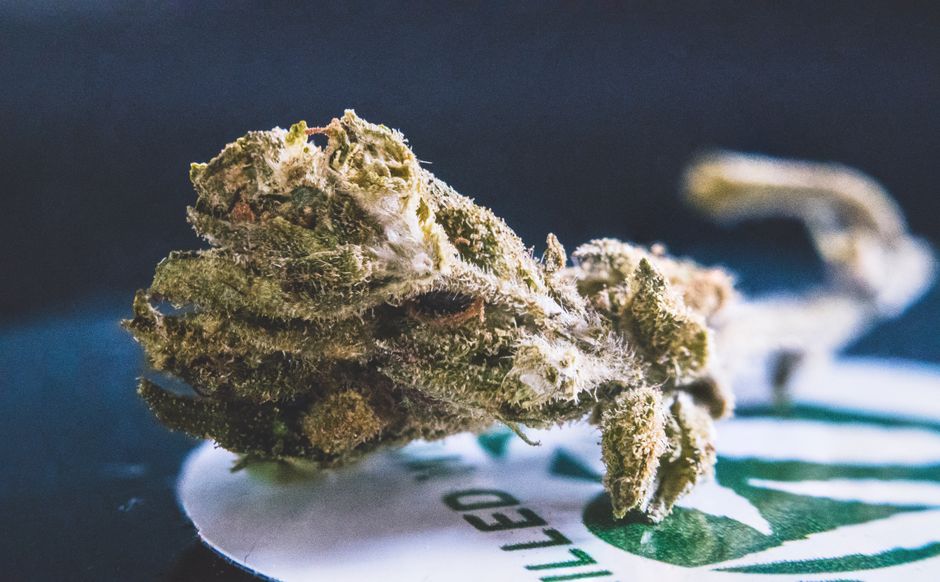
Be skeptical of absolute claims
- “THC-free” should be supported by a relevant, batch-specific report and a clear explanation of the lab’s detection limits.
- “Legal in all 50 states” is too broad to rely on without current state-by-state legal review.
- “Hemp-derived” describes a source, not necessarily the product’s effects or legality.
- “0.3% THC” should specify what was measured, how it was measured, and whether the figure refers to concentration or total package contents.
Brands such as Joy Organics may publish product testing information for customers to review. As with any brand, shoppers should inspect the actual COA for the item and batch they are considering rather than relying on a general marketing statement.
So why did the Farm Bill create the THCA opening?
In short, the 2018 Farm Bill set a federal hemp threshold around delta-9 THC, while leaving unresolved how THCA and potential post-heating THC should fit into that definition. The gap between a pre-heating delta-9 measurement and calculated total THC became commercially important as products were developed and tested to fit the narrower reading.
That history explains the loophole; it does not settle every current legal question. Total-THC calculations, per-container limits, state restrictions, and the 2026 federal change all make the landscape more complicated than a single “0.3 percent” label. For a shopper, the practical routine is simple: check the applicable local rules, read a current batch-specific COA, and distinguish milligrams per serving from milligrams per container.